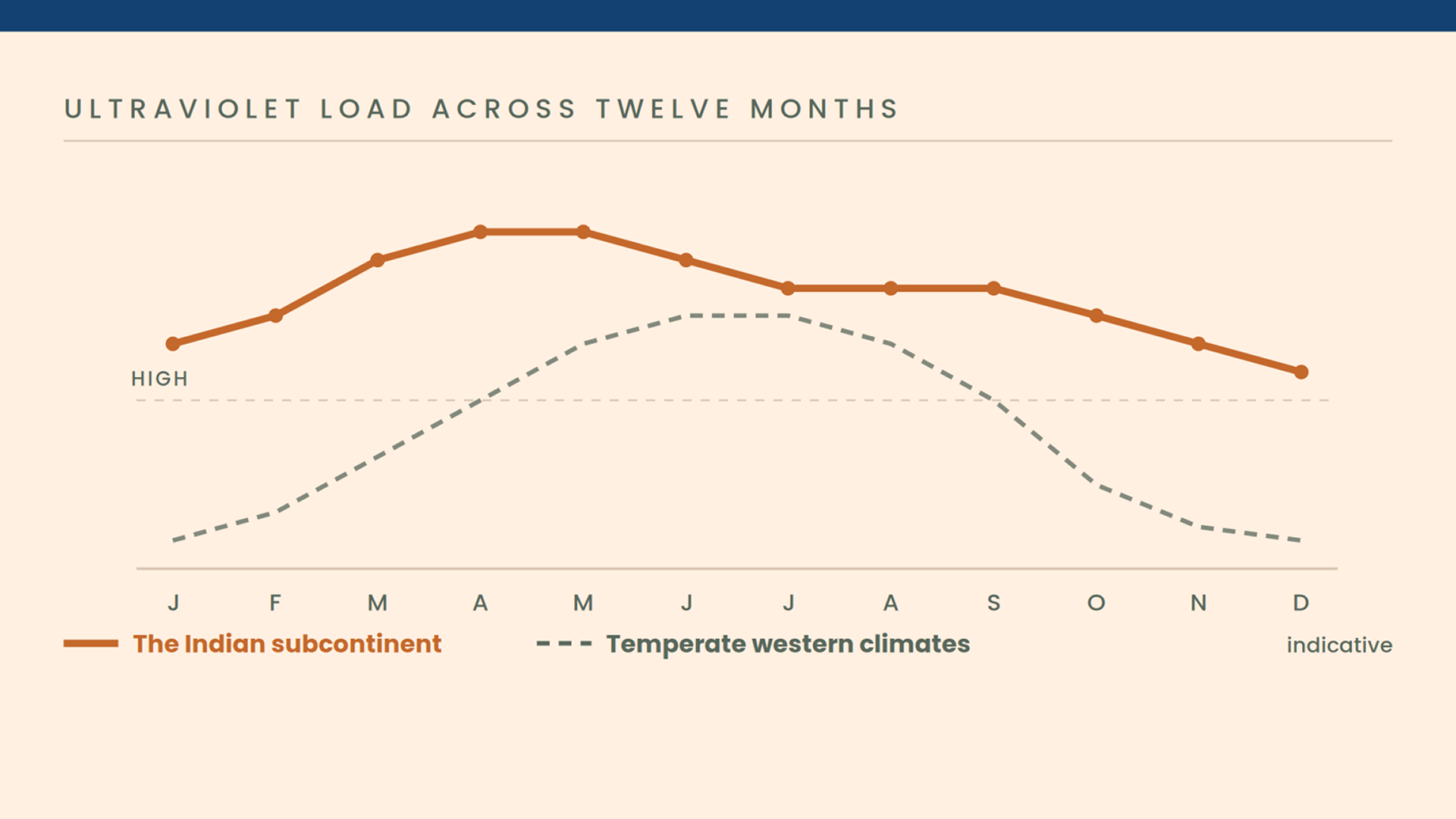
The Constant UV Reality
Most of the Indian subcontinent sits close to the equator, ensuring that ultraviolet radiation remains a year-round constant. Even during a heavy overcast monsoon day or a hazy winter morning, up to 80% of UVA rays penetrate cloud cover.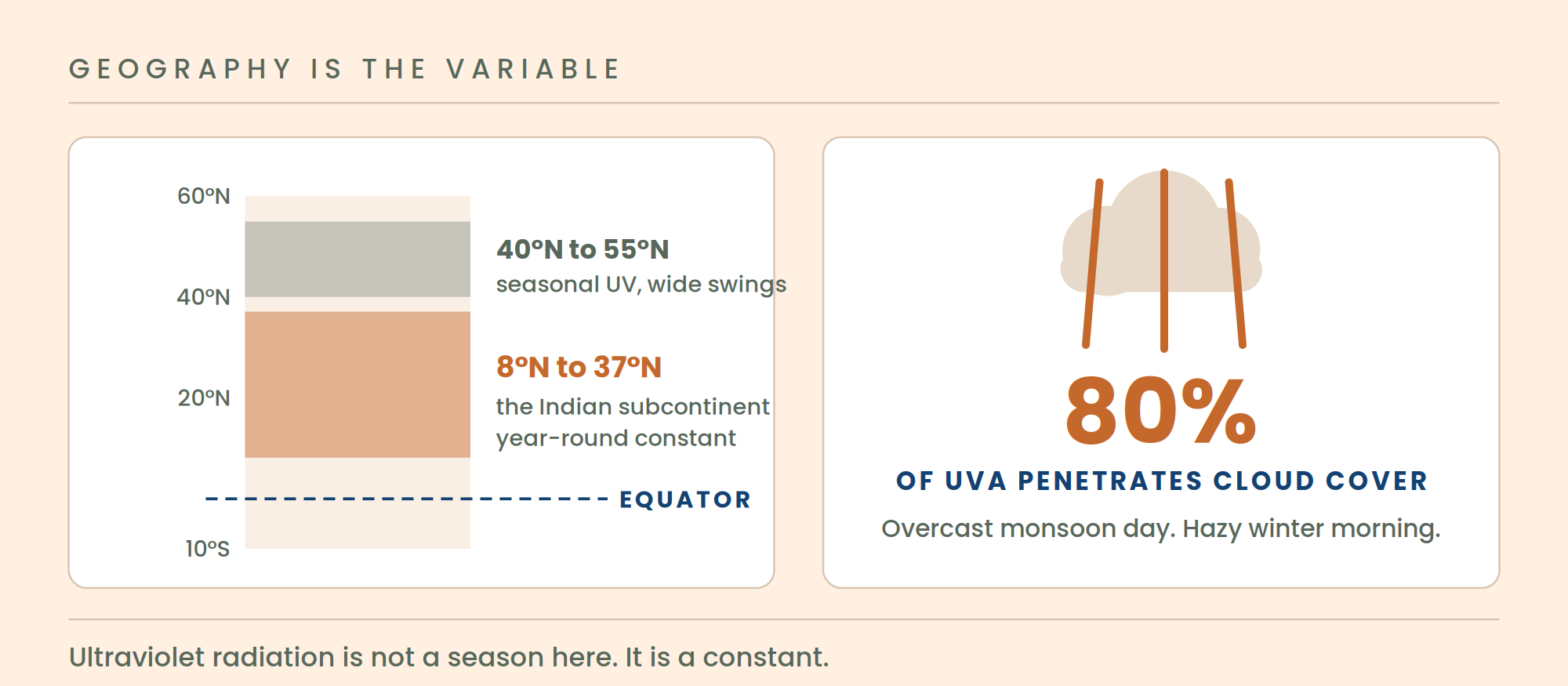
UVA rays are the silent workers of skin destruction. Unlike UVB rays (which cause immediate sunburn), UVA rays penetrate deep into the dermis, breaking down collagen fibers, degrading elastin, and triggering cumulative, irreversible photoaging.
They pass straight through office windows, car windshields, and cloud layers.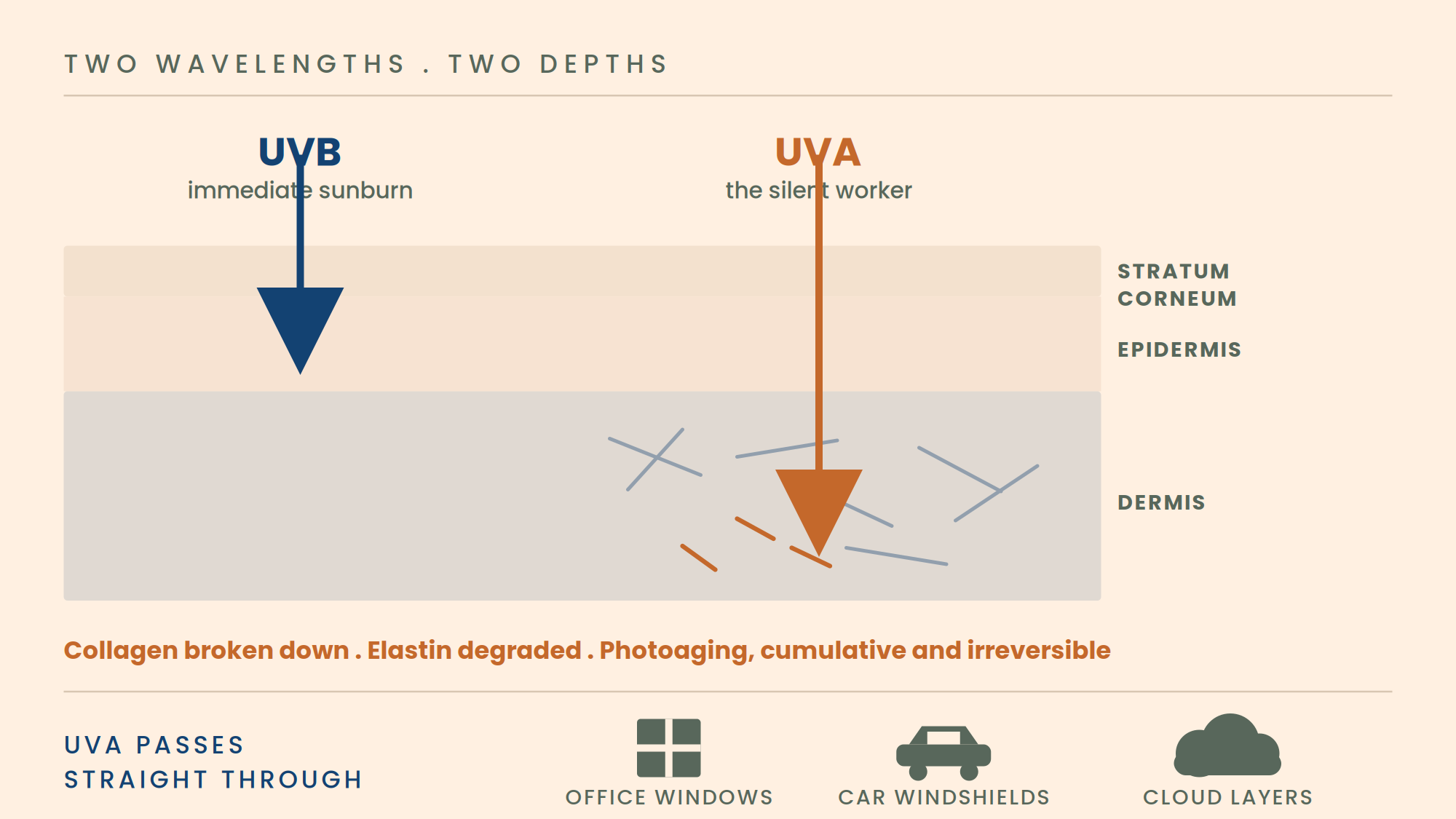
The Urban Micro-Climate Multiplier
Add to this constant UV pressure the reality of India’s urban centers: particulate matter (PM2.5 pollution) and high ambient heat. When pollution particles settle on the skin, they oxidize on contact, generating free radicals that attack cell membranes. When combined with UV exposure, this creates a dual-assault pathway that rapidly degrades the skin barrier.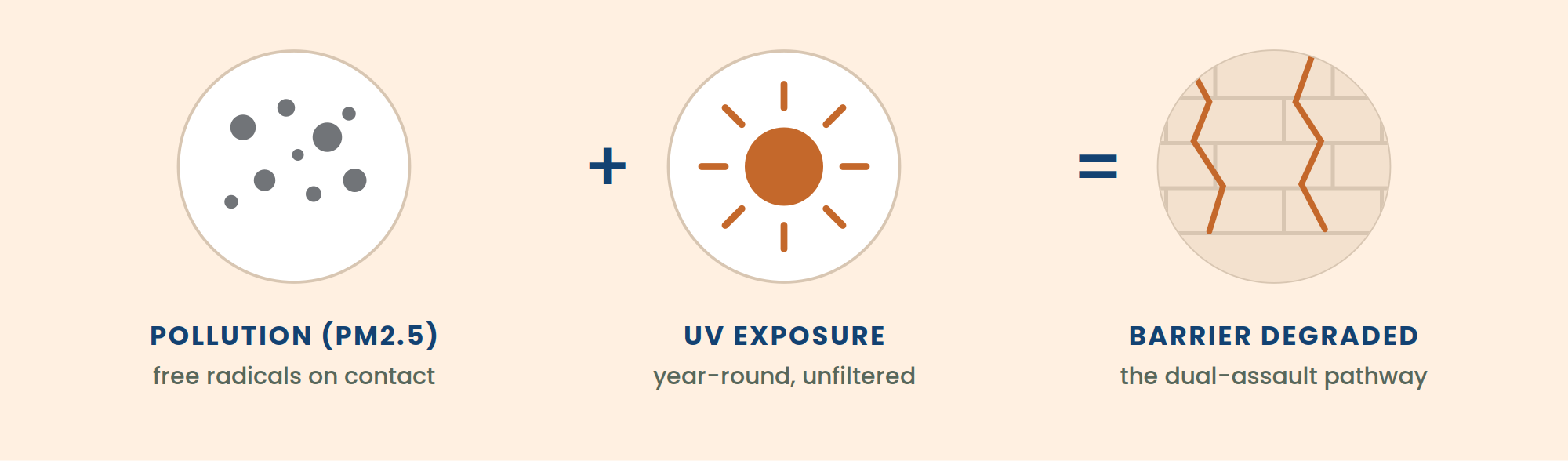
If your skin feels dull, weathered, or prematurely lined by your mid-30s, it is rarely a sign of “getting older.” It is the accumulated tax of treating sun protection as a seasonal accessory rather than a daily baseline standard.
The Standard
Sunscreen is not seasonal armor. It is daily infrastructure. Just as you do not stop wearing shoes because it is raining, you do not drop SPF because the sun isn’t visibly blazing.
Integrate it into your morning standard, rain or shine, indoors or outdoors, because UV radiation does not take a holiday.