Manore

No jargon. No lab coat. Just the truth.

Your skin has a biology. Your decade has a science. Most brands skipped both.

25

%

Thicker than female skin.
Male skin, on average.

2

x

More sebum produced.
Thanks, testosterone.

1

%

Collagen lost per year
after your 30th birthday.

11

+

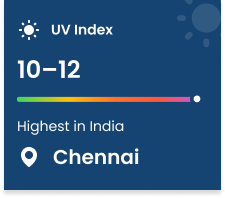
UV Index in Indian cities
during peak summer.

Skin
Thickness

Male skin is approximately 25% thicker than female skin. This is driven by testosterone stimulating dermal fibroblasts. The upside: slower visible aging. The catch: it starts thinning from age 20, steadily and continuously.

Instead Your skin has a specific chapter. Manore was written for it.

Sebum
Production

Testosterone activates sebaceous glands, producing roughly twice the sebum of female skin. This gives male skin a natural protective layer but also means oiliness, larger pores, and a higher tendency toward breakouts in your 20s.

Research : Bailey et al., 2012

Collagen
Density

Men have up to 25% higher collagen density than women at the same age. This is why men’s skin looks younger for longer. But both men and women lose approximately 1% of collagen per year after their 30th birthday. Every. Single. Year.

Research International Dermal Institute

The Shaving Factor

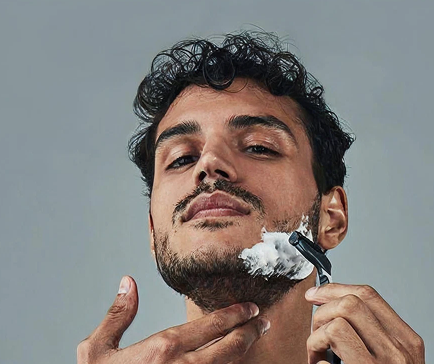
Daily shaving removes the top layer of the stratum corneum — essentially mechanical exfoliation every morning. This repeatedly challenges the skin barrier. Without active barrier support, this compounds over decades as a source of sensitivity and irritation.

Mizukoshi & Akamatsu, 2013

The Honest Comparison

What was built for you vs what you have been using

Not a knock on other brands. Just the biological facts.

Built Around

Unisex / Generic Product

Manore

Sebum Production

Unisex / Generic Product

Manore

The science of when.

Most skincare brands hand you the same formula at 24 that they give you at 44. That is not science. That is inventory management. Your skin biology shifts meaningfully every decade. Select yours

20s

The Foundation Years

Your skin is operating at peak. The question is whether you are building on it or ignoring it.

In your early 20s, testosterone is doing a lot of the heavy lifting. Your skin is thick, collagen is dense, and recovery is fast. Oil production is at its highest — which is why this decade is marked by shine, larger pores and the occasional breakout that should have stopped in school.

The habits you build now are not just for now. Every day of unprotected UV exposure in your 20s shows up in your 30s. The damage does not announce itself. It just quietly compounds.

This is the decade where you think you don't need skincare. You do. You just don't know you do yet.

Your skin biology right now

Sebum / Oil Production
Collagen Density
Skin Barrier Integrity
Recovery Speed
UV Damage Accumulation

A note from Manore

We’re not here yet. That was a choice. We chose to build for the decade that had been overlooked the longest. We’ll earn the right to be part of your 20s someday. Today, we’re focused on your 30s. 

30s

The Transition Window

This is the most consequential window in male skin biology. Oil production begins to moderate. Collagen synthesis starts its slow decline — approximately 1% per year from around age 30, with the process beginning to accelerate slightly in the late 20s.

The cumulative UV damage from your early 20s is not visible yet. But it is there, underneath the surface, in the form of oxidative stress, early pigmentation shifts, and micro-damage to collagen fibres. Your skin is still giving you the benefit of the doubt. Use it.

This is the decade where your skin goes from "I'll deal with this later" to "actually, later is kind of now."

Your skin biology right now

Sebum / Oil Production
Collagen Synthesis
Hydration Retention
Barrier Recovery Speed
UV Damage Accumulation

What Manore does it at this age in 30's

This is the decade Manore was built for. Not adapted. Not extended. Built for, from the first formulation onward.

Every ingredient decision started with one question — what does skin in its 30s actually need right now. Not a decade ago. Not a decade from now.

40s

The Results Decade

The gap between men who invested and men who didn’t is starting to become visible.

By your 40s, collagen loss has compounded silently for over a decade, and the decade adds it all up at once. Elasticity has measurably declined. Lines that were occasional in your late 30s are now consistent. Recovery from sun and stress takes visibly longer.

Here is the good news about Indian skin: melanin-rich skin still offers real protective advantage — slower visible aging, fewer deep wrinkles than lighter skin at the same age. But that advantage was always conditional on support you gave it earlier.

The men ageing better aren’t luckier. They paid attention sooner.

Your skin is not failing you. It has just started charging for what used to be free.

Your skin biology right now

Collagen Production
Barrier Efficiency
Skin Luminosity
Recovery Time
UV Damage Accumulation

Your 40s deserve their own formulation too.

We won’t build it until we’re convinced it’s worthy of that decade. That’s the standard we’ve set for ourselves.

The Indian sun is not

the European sun.

Most sunscreens sold in India were built for European UV levels. Indian cities regularly hit UV Index 11+ classified “Extreme” by WHO. Even on cloudy days, even through glass.

Melanin offers natural protection roughly equivalent to SPF 4 to 6. The Indian sun delivers UV Index 11. Do the math.

It’s an advantage, not a shield. It never prevented collagen breakdown from daily exposure.

SPF 15
The old standard
7% gets through

SPF 50
Good. Not our standard.
2% gets through

SPF 30
Most brands stop here
3% gets through

SPF 70
Manore standard 
1.4% gets through

UVB Protection by SPF Number

The SPF numbers,

honestly explained.

SPF is not a scale where more is always better in a linear way. It is a measure of how much UVB radiation your sunscreen blocks before your skin starts to burn. The numbers are real. Here they are.

The difference between SPF 30 and SPF 70 is about 1.6% of UVB. That sounds small. But in Indian UV conditions — where daily UV Index regularly reaches 10 to 11 — that margin translates to meaningful additional protection, especially for skin prone to pigmentation. And crucially: these numbers assume you apply the correct amount. Most men apply about 25% of the recommended amount, which means your effective SPF 30 is closer to SPF 8. This is not a lecture. It is just the data.

The PA Rating Explained

PA is a Japanese rating system measuring UVA protection. PA+ is minimal. PA++++ is the maximum. UVA is the ray that causes pigmentation, collagen breakdown and premature aging — even when you don’t burn. For Indian skin, PA++++ is not optional.

The things men believe about their skin.

And whether they're true.

Not judging. These are extremely common beliefs. Some are understandable. Some are myths that the industry quietly let survive because they were convenient.

  • "I have dark skin. I don't need sunscreen."

    Melanin provides a natural SPF equivalent of approximately 4 to 6. The Indian sun delivers UV Index 11. You are not protected. You are slightly better off than someone with no melanin, which is not the same thing. Darker skin is actually more prone to post-inflammatory hyperpigmentation — which UV exposure triggers. The research on this is consistent and clear.

  • "Sunscreen is only for the beach or summer."

    UVA rays — the ones responsible for aging and pigmentation — are present at relatively consistent levels all year. They penetrate cloud cover. They come through your office window. The beach trip accounts for maybe 5% of your annual UV exposure. The other 95% is Tuesday morning.

  • "Men's skin doesn't need as much moisturising because it's oilier."

    Oil and hydration are not the same thing. Sebum sits on the surface and provides a protective layer. Hydration refers to water content within the skin layers. Male skin is actually less hydrated on average than female skin in older adults, according to studies published in the PMC. You can have oily skin and dehydrated skin simultaneously.

  • "I'm young. Aging is something to deal with later."

    Collagen loss begins in your mid-20s at approximately 1% per year. UV damage from your 20s typically manifests visibly in your 30s. The decade you are in right now is building the face you will have at 40. Later is not a separate conversation. Later is the direct consequence of now.

  • "Indian men age better than most."

    Actually true. Melanin-rich skin has a genuine, science-backed advantage. Higher collagen density, natural UV filtering, a tendency to develop fine lines later than lighter skin types. Indian men in their 30s and 40s often look significantly younger than Western counterparts of the same age. The point of Manore is not to fix a problem. It is to protect and extend an advantage that already exists.

This is what science looks like when it's built into a product.

Every decision.Every ingredient.Every texture.Every formulation.Made for one man.The Indian man in his 30s.
Nothing more. Nothing less.

Some Things
Are Worth Waiting For.

We’re putting the final touches on skincare built specifically for the biology of Indian men in their 30s.