Rule 1: The Order of Dominance
By international regulatory standards, ingredients on an INCI (International Nomenclature of Cosmetic Ingredients) list must be in descending order of concentration, from highest to lowest.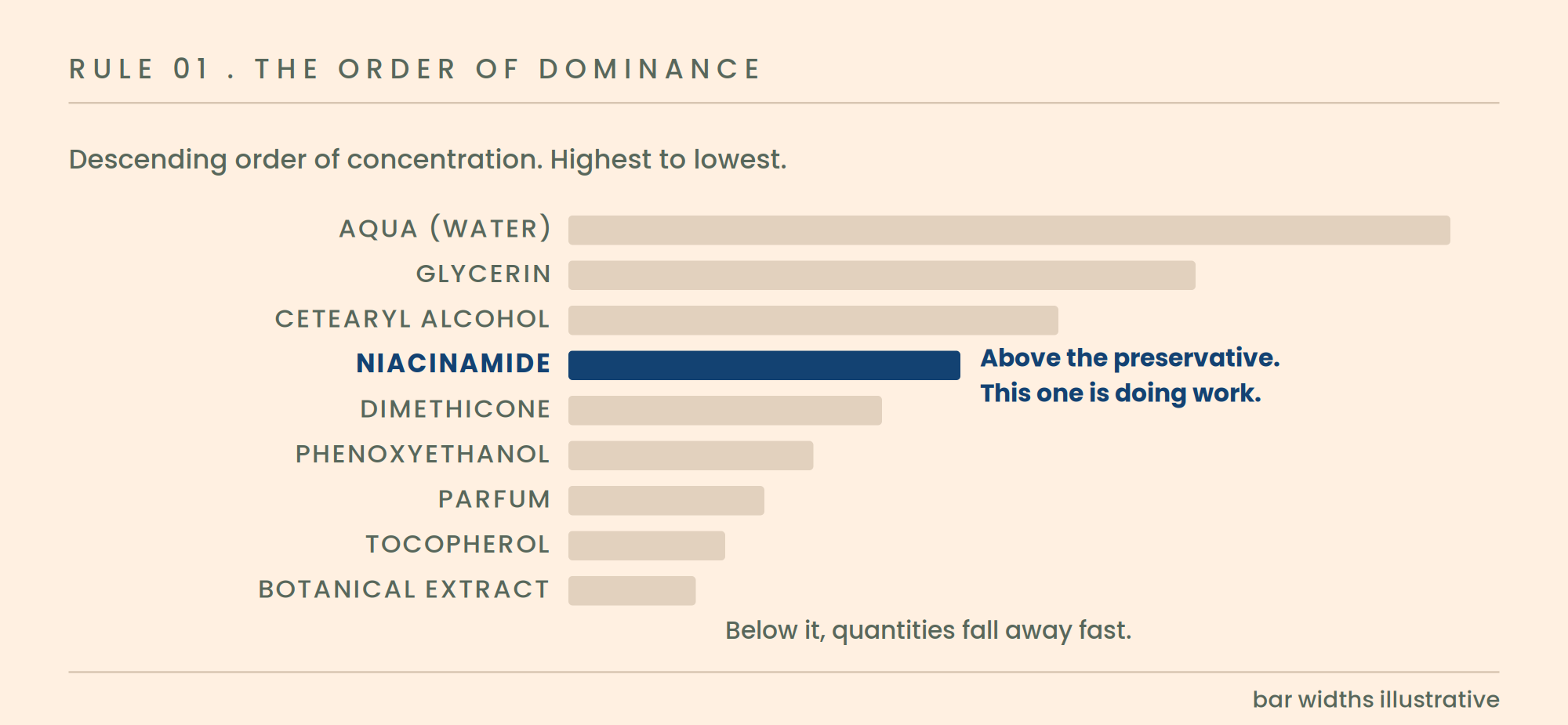
If Water (Aqua) is first, the formula is water-based.
If the active ingredient you are paying for (say, Niacinamide or Hyaluronic Acid) sits after the preservative or fragrance, it is present in such minuscule amounts that it is functionally useless. It’s there for label decoration, not results.
Rule 2: Spotting the Marketing Fluff
Brands love to feature exotic plant extracts on the front panel (“Infused with Himalayan botanical roots!”). When you check the back, that extract usually sits right at the very bottom of the list, below the preservative phenoxyethanol.
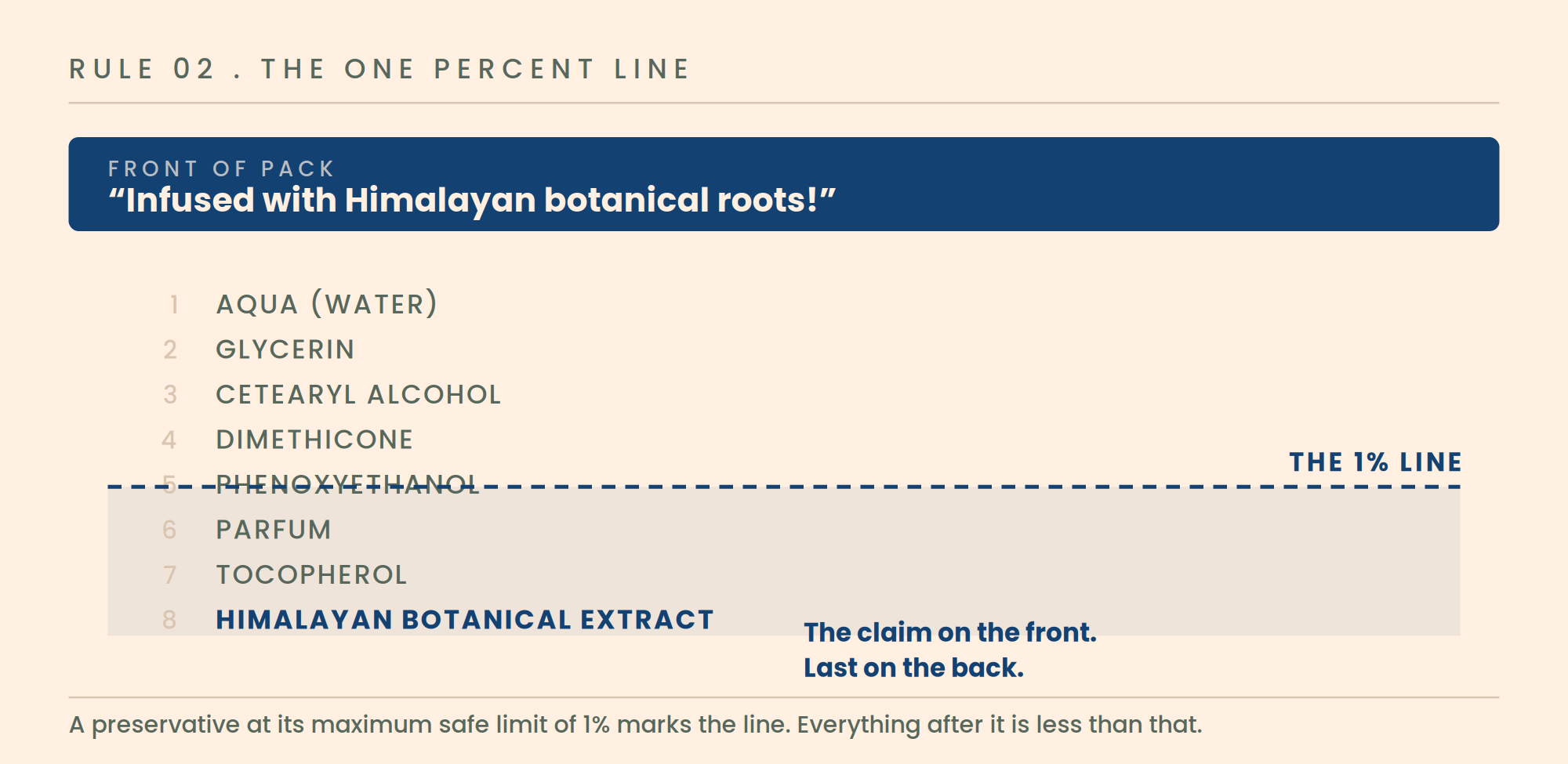
If a preservative is used at a maximum safe limit of 1%, anything listed after it makes up less than 1% of the total formula. If your active ingredient is down there, it’s marketing window dressing.
Rule 3: Focus on Core Mechanisms, Not Buzzwords
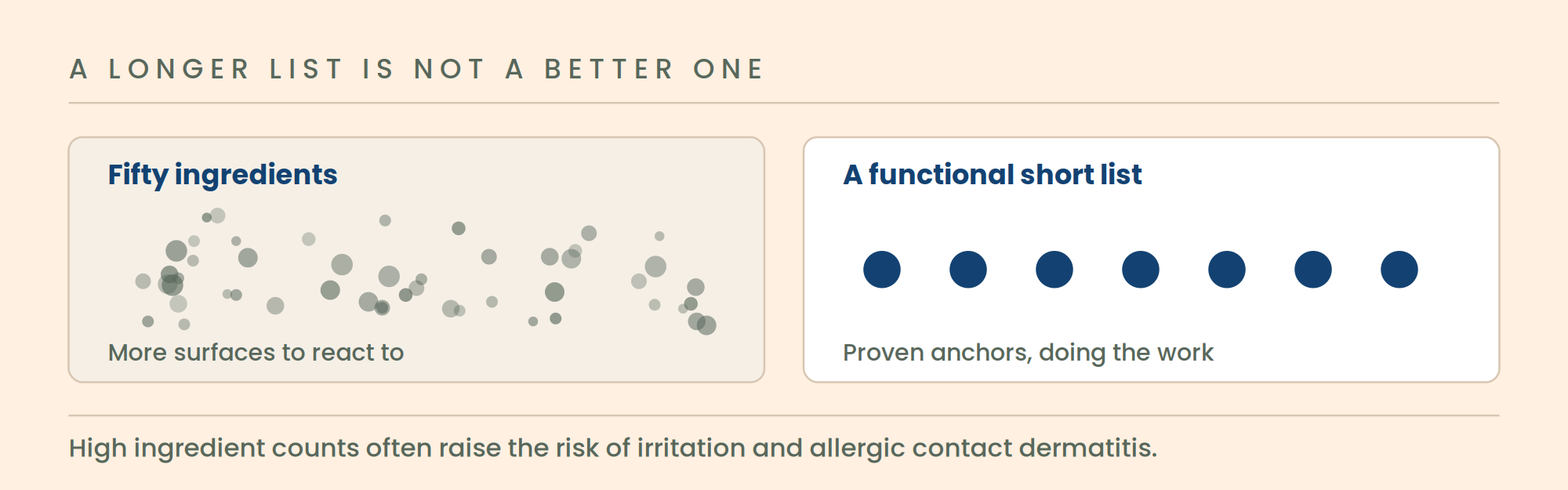
You don’t need 50 ingredients in a bottle. In fact, high ingredient counts often increase the risk of irritation or allergic contact dermatitis. Look for clean, functional formulations built around proven anchors:
Humectants (like Glycerin or Hyaluronic Acid) to pull moisture into the skin.
Emollients and Ceramides to seal the barrier and repair micro-damage.
Antioxidants (like Niacinamide or Vitamin C derivatives) to protect against urban free radicals.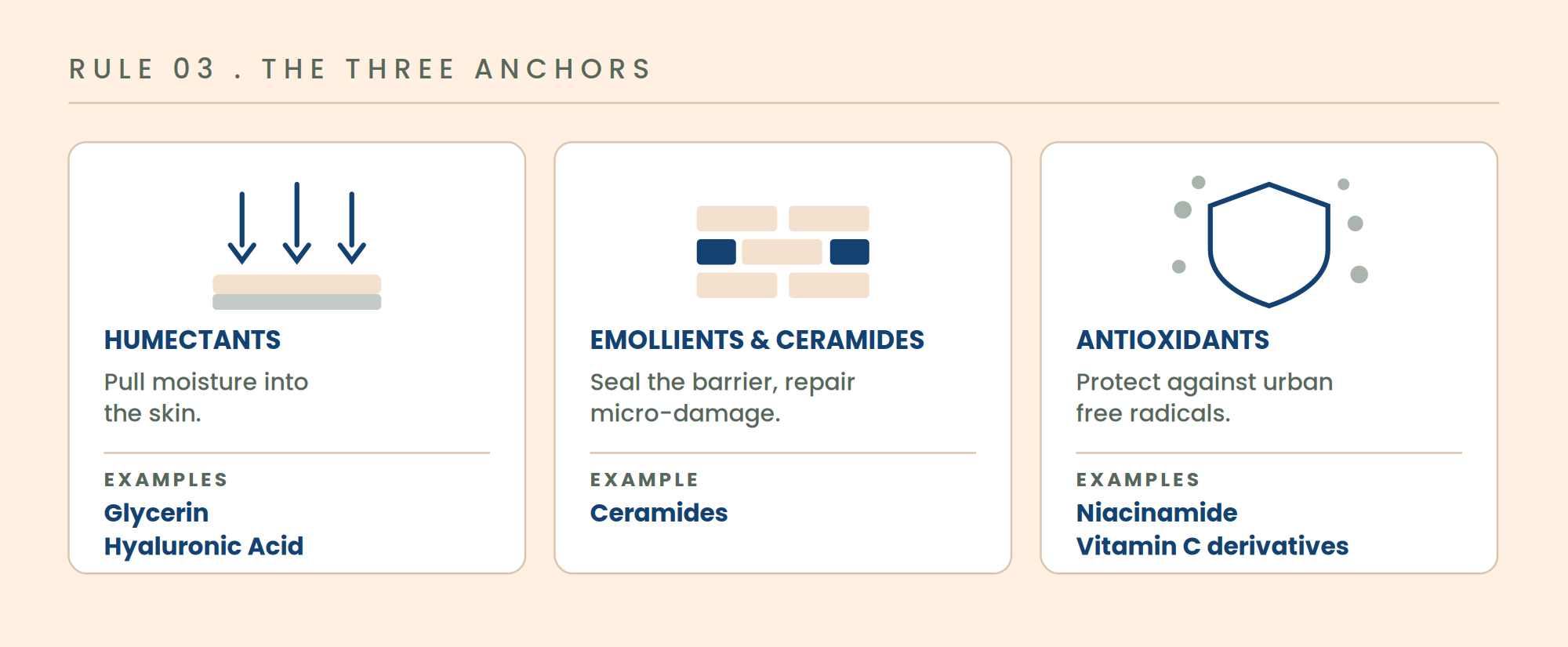
The Standard
Ignore the noise on the front of the bottle. Turn it around, look at the top five ingredients, and judge the product by its actual structural composition. Precision beats complexity every single time.