The Number
In 2024, women accounted for just over 70% of India’s sunscreen market. Men made up the remainder, a category that, notably, is now growing faster than the market as a whole, at a projected 9.9% annually.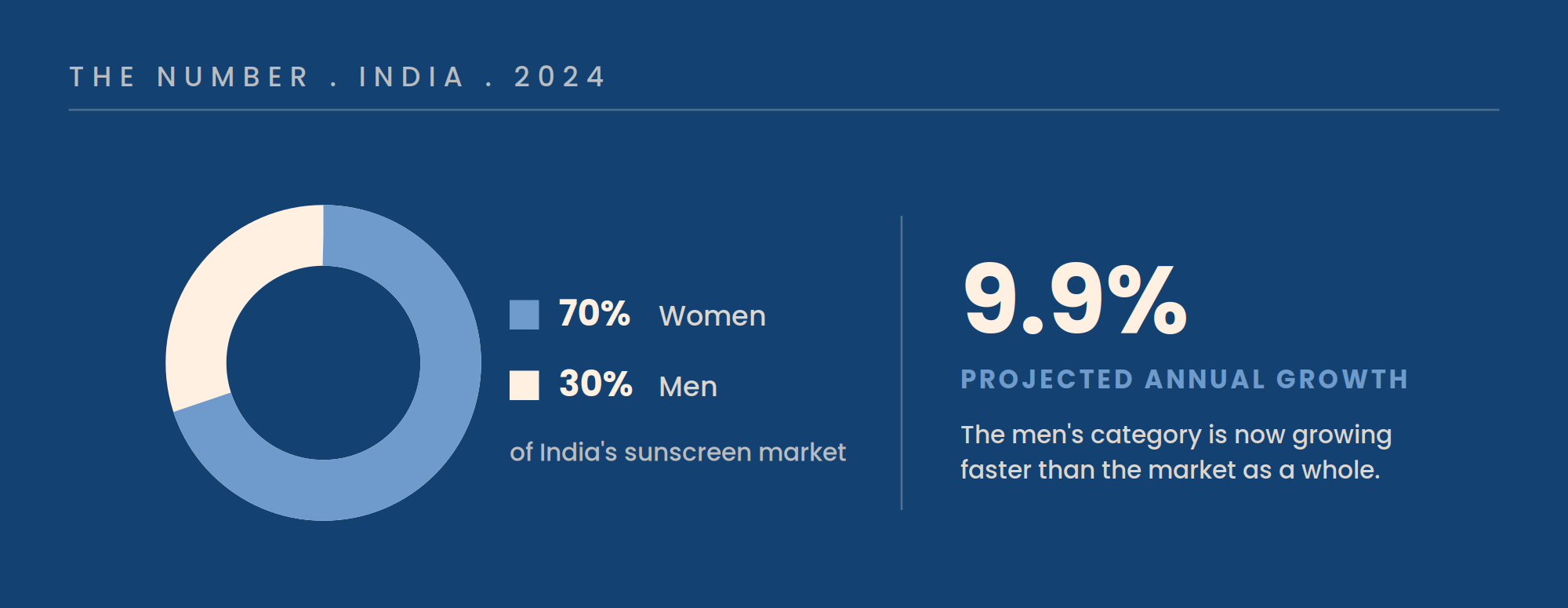
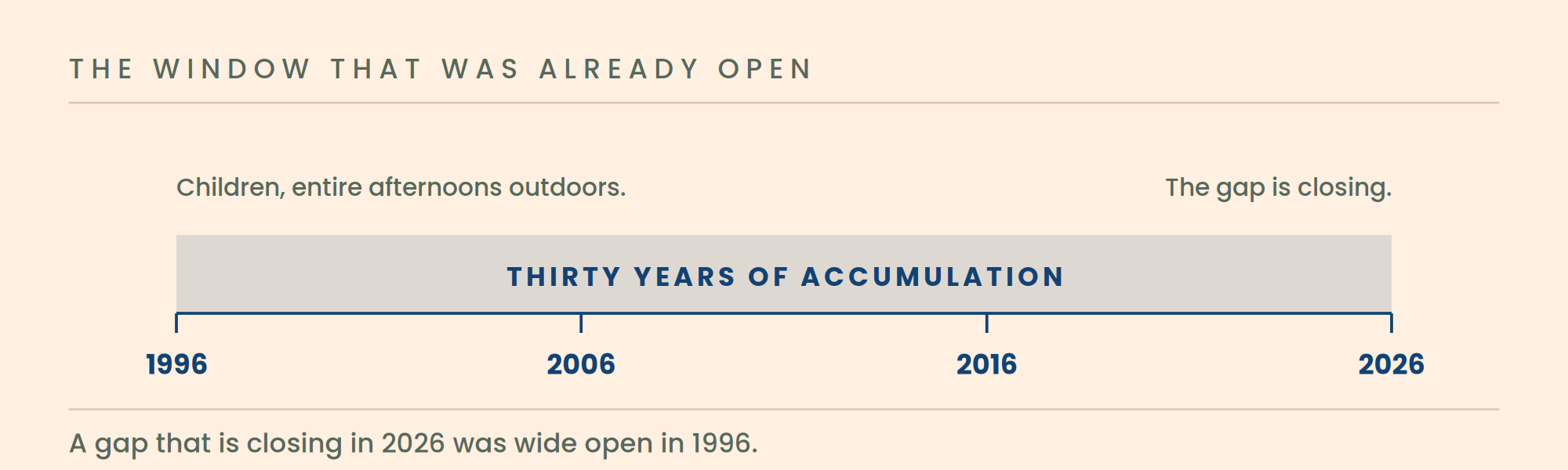
So the gap is closing. But a gap that is closing in 2026 is a gap that was wide open in 1996, which is precisely when the men now in their 30s were children spending entire afternoons outdoors.
What the Exposure Actually Costs
The most-cited figure in this space is that UV exposure accounts for around 80% of visible facial ageing. It comes from a 2013 study by Flament and colleagues, which assessed 298 participants in southern France, splitting them into sun-seeking and sun-avoiding groups and scoring clinical signs of ageing across age brackets.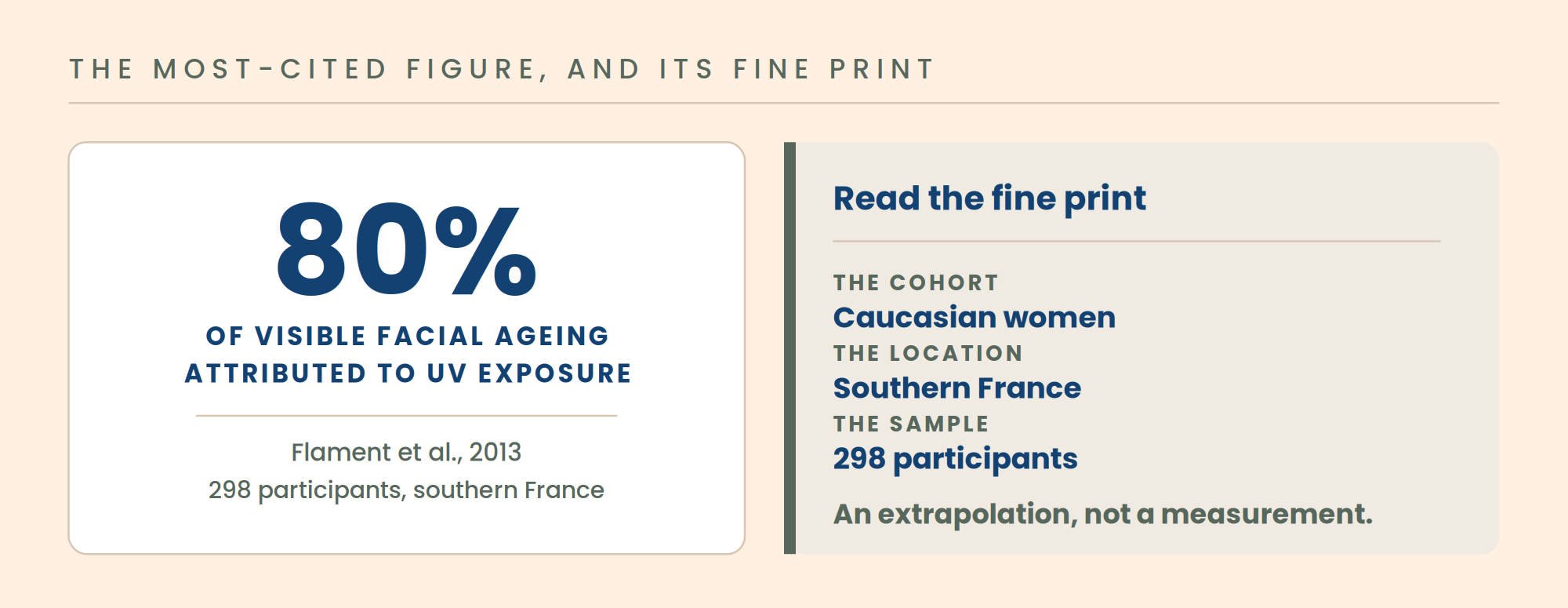
We are going to be straight with you about that number, because most brands are not: that study looked at Caucasian women in France. It is the best-known estimate available and the direction of the finding is supported across the photoaging literature. But applying a French female percentage to Indian male skin is an extrapolation, not a measurement, and anyone who quotes it at you without saying so is hoping you will not check.
What the evidence supports without extrapolation is this: sun exposure is the dominant modifiable cause of how old your face looks, and its effects accumulate silently over decades rather than announcing themselves.
Indian Skin Does Not Age the Way the Textbooks Describe
This part matters more than the percentage, and almost nobody talks about it.
The photoaging most Western skincare is built around is a wrinkle-and-fine-line story. Indian skin, sitting predominantly in Fitzpatrick types IV and V, does not primarily age that way. It ages through pigmentation (uneven tone, dark patches, post-inflammatory marks that outstay the spot that caused them), along with laxity and enlarged pores.
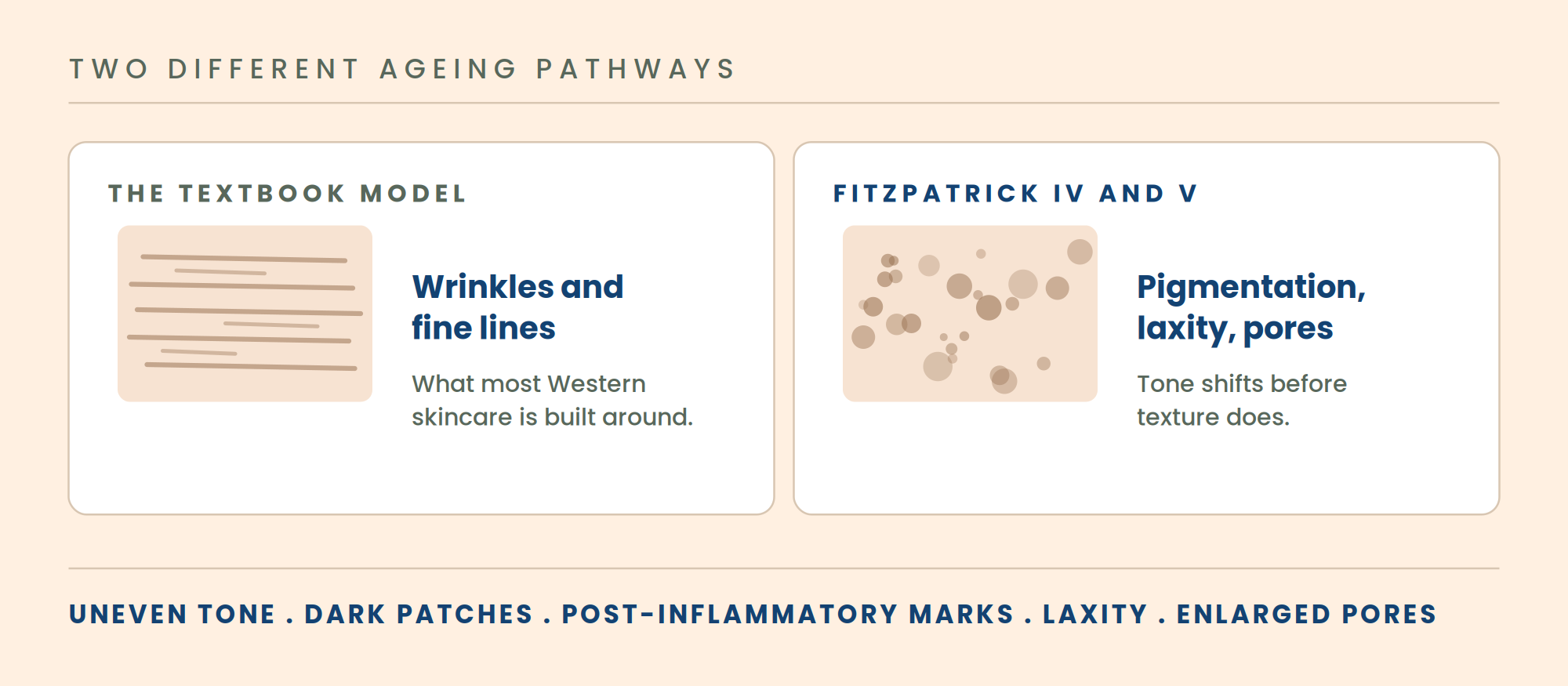
Which means the man checking his forehead for lines is checking the wrong thing. The damage on Indian skin shows up as tone before it shows up as texture.
There is direct evidence here. A study conducted at Maulana Azad Medical College in Delhi, described as the first real-world study on Indian skin phototypes IV and V, enrolled 230 adults with existing pigmentation irregularities who did not use sunscreen, and had them apply sunscreen twice daily over twelve weeks. The clinical assessment of pigmented spot density and skin radiance showed significant improvement, with both the participants’ own perception and instrument-based colorimetric measurement pointing the same way.
The Honest Position
Nobody told us. That is genuinely most of the explanation.
Sunscreen entered Indian culture attached to two things: holidays, and fairness. Neither of those is a reason for a 34-year-old man in Hyderabad to put something on his face at 8am on a working Wednesday. So he did not, and neither did anyone he knew, and thirty years went by.
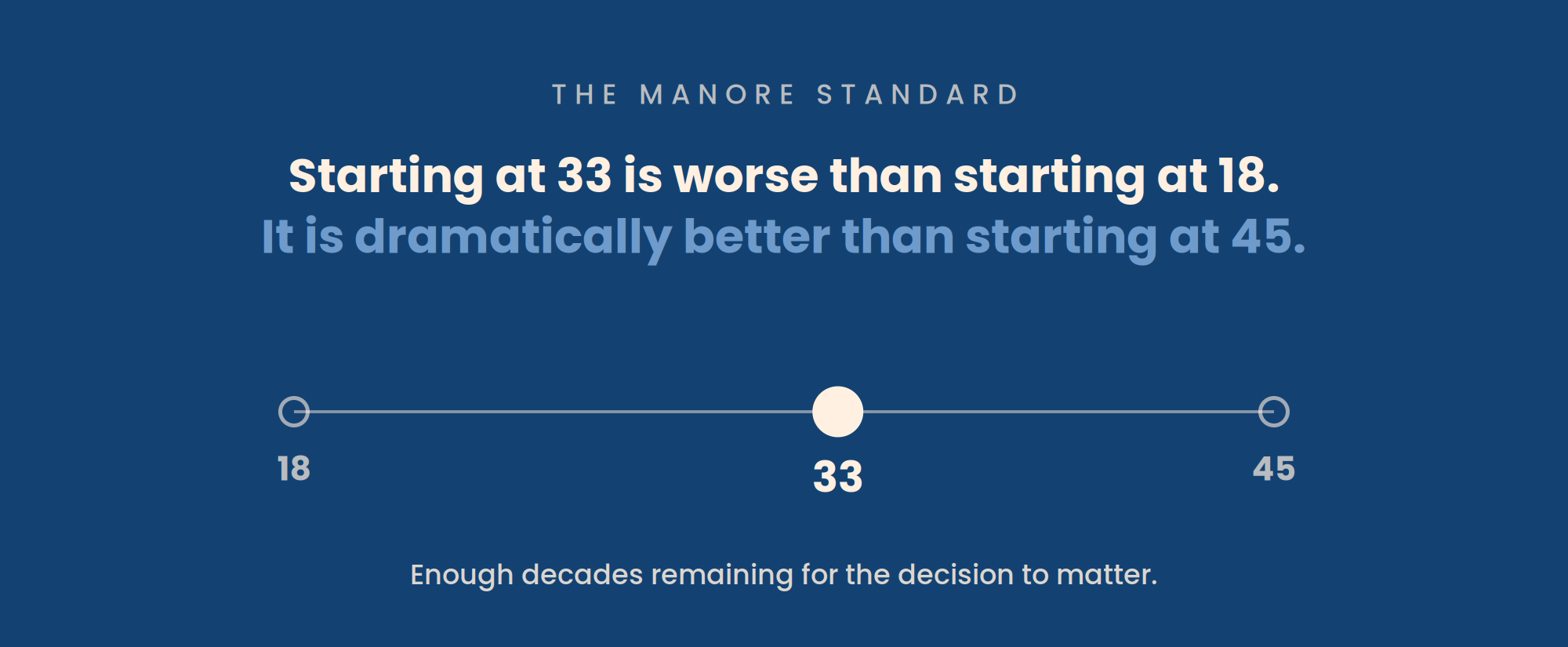
The men now in their 30s are the first generation with enough information to make a different decision, and enough decades remaining for that decision to matter.
Starting at 33 is worse than starting at 18. It is dramatically better than starting at 45.